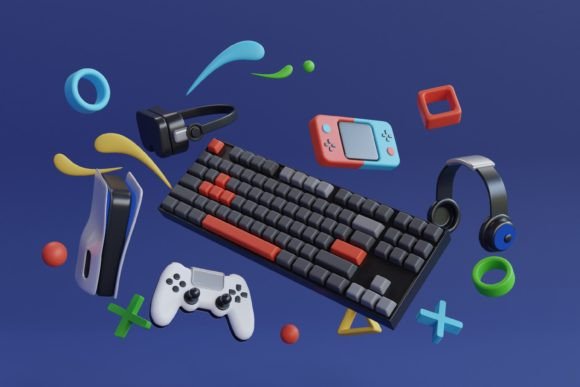
The Power of Digital Precision: Gaming Keyboard 3D Model Rendering Explained
In today's digital marketplace, showcasing a product effectively is paramount. For hardware like gaming keyboards, a simple photograph often doesn't capture the intricate design, texture, or innovative features. This is where Gaming Keyboard 3D Model Rendering becomes an indispensable tool. It is the process of creating a hyper-realistic, three-dimensional digital representation of a keyboard from a computer model. Unlike a static image, a Gaming Keyboard 3D Model Rendering is built from data, allowing for unparalleled control over every visual aspect—from the angle of view to the reflection of light on a keycap.
What Exactly is a 3D Model Rendering?
Think of it as digital craftsmanship. A designer or artist starts with a 3D model—a mathematical representation of the keyboard's geometry. This model is then placed in a virtual scene where lighting, materials, textures, and cameras are applied. The software calculates how light interacts with the surfaces, creating shadows, highlights, and realistic material properties like the matte finish of a chassis or the glossy transparency of RGB LEDs. The final output, often a JPG or PNG file, is a stunningly lifelike image that can look more detailed and controllable than a traditional photo. The core value of Gaming Keyboard 3D Model Rendering lies in its flexibility; it is a digital asset born from a design file, not a physical snapshot.
Key Characteristics and Features of a Quality Rendering
A superior Gaming Keyboard 3D Model Rendering possesses several distinct features:
- Photorealistic Quality: It blurs the line between digital and real, with accurate lighting, shadows, and material definition.
- Complete Angle Freedom: You can generate views from any perspective—top-down, side profile, close-up on macro keys—without moving a physical camera.
- Material and Color Flexibility: Change the keyboard's color scheme, switch keycap materials from plastic to brushed aluminum, or adjust RGB lighting patterns instantly within the 3D scene.
- Contextual Placement: The model can be rendered on a desk, in a dark gaming setup, or in a minimalist studio environment to suit different narratives.
- Consistency Across Assets: Multiple images for a marketing campaign all derive from the same source model, ensuring perfect visual consistency.
The Versatile Applications: Where Your Rendering Comes to Life
The JPG or PNG file you get from a Gaming Keyboard 3D Model Rendering design is a multi-purpose powerhouse. Its utility spans across numerous professional and creative fields.
- E-commerce and Marketing: High-quality renderings are perfect for product pages, online advertisements, and social media posts. They can highlight specific features with close-up shots that would be difficult to photograph cleanly.
- Website and UI/UX Design: Web designers use these assets as hero images, background elements, or interactive product showcases to create engaging user experiences.
- Print and Promotional Material: From high-resolution posters to brochures and magazine ads, the clean, controlled imagery of a 3D render stands out in print.
- Banner and Digital Ad Creation: The ability to tailor the background and lighting makes creating a series of cohesive banners for different campaigns straightforward.
- Concept Presentation and Prototyping: For designers and inventors, a Gaming Keyboard 3D Model Rendering allows them to present a new keyboard design to stakeholders or clients before a physical prototype is ever built.
Who Benefits from Gaming Keyboard 3D Model Rendering?
The audience for this technology is broad. General consumers encounter these renderings daily on shopping sites, appreciating the clear and attractive product visuals. Professionals like marketing managers, e-commerce specialists, and ad creatives rely on them to produce compelling campaigns efficiently. Content creators and streamers might use them in video overlays or channel artwork. Perhaps most significantly, business owners and hardware startups find immense value in using Gaming Keyboard 3D Model Rendering to launch and market products with a high-end visual identity without the high cost of extensive professional photography, especially for products still in development.
Real-World Scenarios and Practical Use Cases
Imagine a small company launching a new ergonomic gaming keyboard. They have one physical prototype. Using Gaming Keyboard 3D Model Rendering, they can produce a suite of images showing the keyboard in five different color variants, with detailed shots of the unique wrist rest, and in both day and night-themed gaming setups. All these images are ready for their website launch, Amazon listing, and Instagram campaign simultaneously. Another scenario: a web design agency is building a site for a gaming peripheral brand. They use the brand's provided 3D render of a keyboard as a dynamic centerpiece, animating a slow rotation of the model to showcase its design on the homepage.
Evaluating Its Strengths and Practical Considerations
The strengths of Gaming Keyboard 3D Model Rendering are clear. It offers unmatched visual control, cost-effectiveness over multiple photography sessions, and speed—changes can be made digitally without re-shooting. It is also ideal for pre-launch marketing of non-existent physical products.
However, practical expectations are important. The quality of the final PNG or JPG is wholly dependent on the skill of the 3D artist and the detail of the initial 3D model. A poorly constructed model will result in a flat or unrealistic render. It also requires specific expertise and software, which may be an upfront investment. While a render can mimic reality, for some ultra-high-detail close-ups of actual wear or unique real-world imperfections, traditional photography might still play a role. The key is to understand your project's needs: if you require consistent, flexible, and pristine visuals from multiple angles, a Gaming Keyboard 3D Model Rendering is likely the optimal solution.
Guidance for Your Project: Is 3D Rendering Right for You?
When considering a Gaming Keyboard 3D Model Rendering for your needs, ask these questions:
- Do I need multiple, consistent views of the same product?
- Am I marketing a product that isn't physically available yet, or do I plan to offer multiple color options?
- Is my primary use digital (websites, ads, UI) where clean, scalable images are crucial?
- Do I have access to, or budget for, a skilled 3D artist and a high-quality 3D model file?
If your answers lean toward "yes," then investing in a Gaming Keyboard 3D Model Rendering will provide a versatile asset that can serve countless purposes, from making banners to defining your entire product's visual presence online. It is more than just an image; it is a digital prototype, a marketing toolkit, and a cornerstone of modern visual communication for gaming hardware.